The 5 Best Kansas State Wildcats in NFL History
Kansas State was once considered the worst program in college football. Then Bill Snyder arrived and built one of the greatest turnarounds in sports history. These are the five best Wildcats ranked by their college careers in Manhattan.
1. Darren Sproles
Running Back · 2001 to 2004
Darren Sproles stood 5-foot-6, but his Kansas State résumé was substantial. He rushed for more than 1,900 yards in 2003 and helped lead the Wildcats to a Big 12 championship, secured with an upset of top-ranked Oklahoma. His production and the team's title make that season the central reference point for evaluating his contribution to the program.
Sproles' ranking should rest on those accomplishments rather than exaggerated descriptions of how difficult he was to tackle. The rushing total establishes a major individual season, and the championship connects that work to a defining team result. His size adds contrast to the story without explaining away the achievement. For Kansas State, his case is especially strong at its peak, where significant production and conference success came together.
2. Terence Newman
Cornerback · 1999 to 2002
Terence Newman earned the Thorpe Award in 2002 and was a consensus All-American at Kansas State. The cornerback's speed was a notable part of his college profile, but the awards provide the clearest measure of his standing. He later became a two-time Pro Bowler, adding professional recognition to a résumé whose college centerpiece was already firmly established.
Newman's place in Kansas State's ranking rests on the strength of that nationally recognized peak. The Thorpe honor gives his defensive contribution particular weight, while consensus All-America status reinforces the breadth of his recognition. That is a different kind of case from one built around offensive yardage or career scoring totals. His later NFL success belongs in the story, but his college honors supply the foundation.
3. Michael Bishop
Quarterback · 1997 to 1998
Michael Bishop finished second in the 1998 Heisman Trophy voting after leading Kansas State to an 11–0 start and a No. 1 ranking. As a quarterback, he contributed through both his running and his deep passing, giving the offense more than one avenue for production. That season brought individual recognition alongside a prominent place for the Wildcats in the national picture.
Bishop's ranking argument is centered on peak impact rather than a long accumulation of career statistics. His Heisman finish indicates how highly his season was regarded, while Kansas State's unbeaten start connects his play to team achievement. The combination of rushing and downfield throwing also matters to his quarterback identity. His college case is strongest when those contributions and results are considered together.
4. Jordy Nelson
Wide Receiver · 2004 to 2007
Jordy Nelson arrived at Kansas State as a walk-on and finished with an All-America season in 2007. He caught 122 passes for 1,606 yards that year, giving his college career a substantial statistical peak. His later success in Green Bay extended the story, but the progression from walk-on arrival to national recognition was already a meaningful Kansas State achievement.
Nelson's place in the school's ranking rests on production as much as his route into the program. The reception total reflects extensive involvement in the passing game, while the yardage adds substance to that workload. His final-season distinction supports a peak-focused argument without requiring claims about dominance throughout his career. Kansas State's contribution to his story includes both the opportunity and the accomplished receiver he became there.
5. Collin Klein
Quarterback · 2009 to 2012
Collin Klein led Kansas State to a Big 12 championship in 2012 and finished third in the Heisman Trophy voting. He also ran for more than 50 touchdowns during his college career, making rushing production an important part of his work at quarterback. The title season supplies a clear peak, while the career scoring total broadens the picture beyond that year.
Klein's ranking case combines a nationally recognized season with a sustained scoring contribution. His rushing touchdowns should be understood as part of his quarterback résumé, not as a reason to recast him as a running back. The championship connects his individual standing to a major program achievement. Together, those elements give Kansas State a strong college-career argument grounded in both peak success and accumulated production.
Who Just Missed the Cut
Tyler Lockett, Mark Simoneau, Martin Gramatica, Jaime Mendez, Chris Canty, and Deuce Vaughn all deserve mentions. Lockett was a four year star receiver and returner.
The Snyder Turnaround
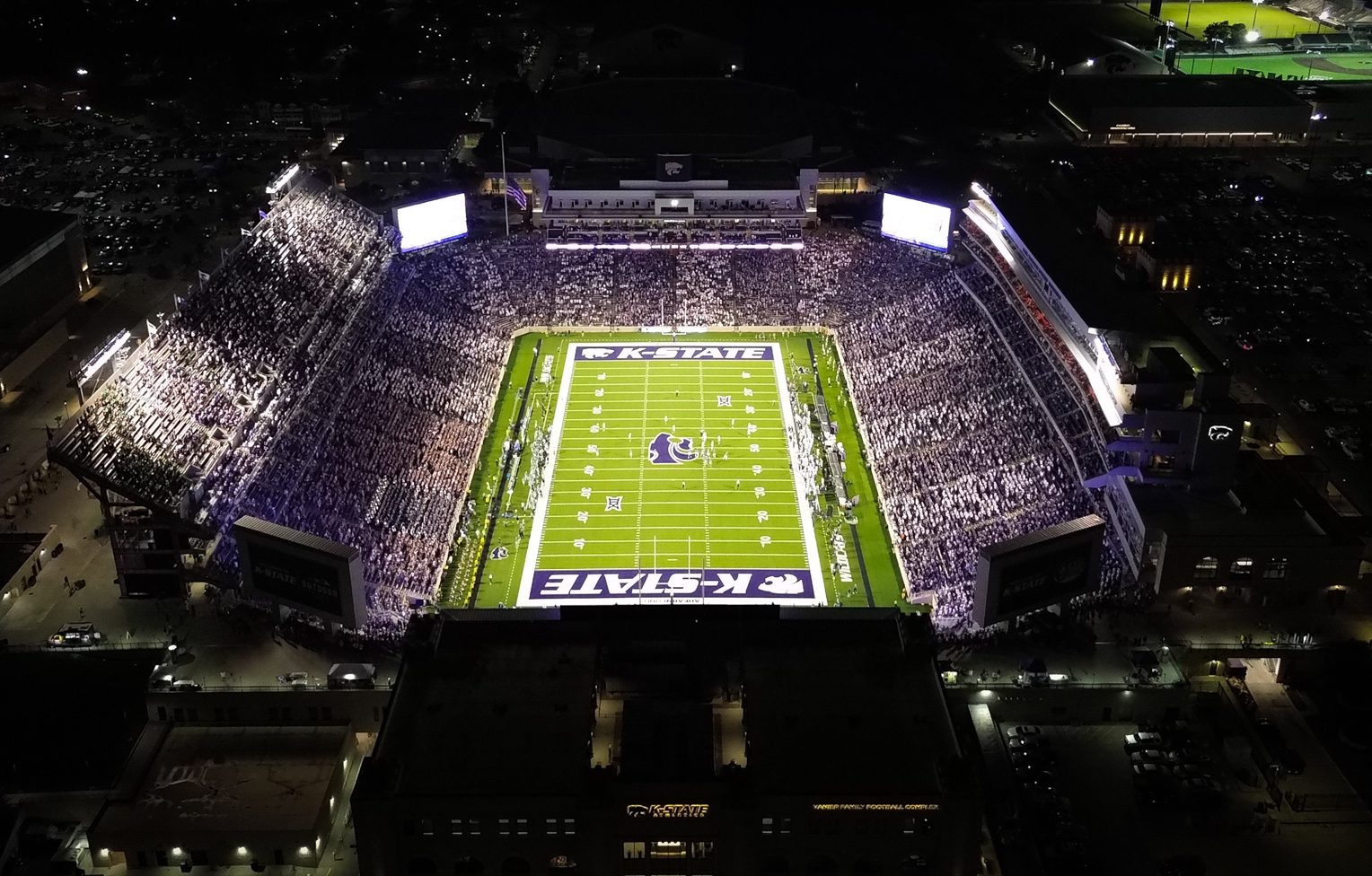
Bill Snyder took over a program with almost no winning history and turned it into a national contender by recruiting junior college players and developing walk ons. The stadium now bears his family's name.
Manhattan's Walk On Culture
Few programs have done more with less than Kansas State. Snyder built a system that valued junior college transfers, in state walk ons, and players other schools overlooked, then coached them up with relentless attention to detail. Jordy Nelson, Mark Simoneau, and many others arrived with little fanfare and left as NFL prospects. That culture still shapes the program today, and it is a big reason the Wildcats continue to win games they are not supposed to win in the Big 12.
Know Your Cats?
CollegeGuessr gives you five NFL players every day to place with their college. Kansas State's walk on stars show up more than you'd think.
Test Yourself on Kansas State Players
Reading about them is one thing. Naming them on sight is another. CollegeGuessr shows five NFL players a day and asks which college each came from. Answer fast for up to 200 points per player, then see how you stack up on the daily NFL trivia leaderboard.