The 10 Best College Football Wide Receivers of All Time
From Biletnikoff winners to Heisman receivers, these are the 10 best college football wide receivers of all time, ranked by catches, yards and touchdowns.
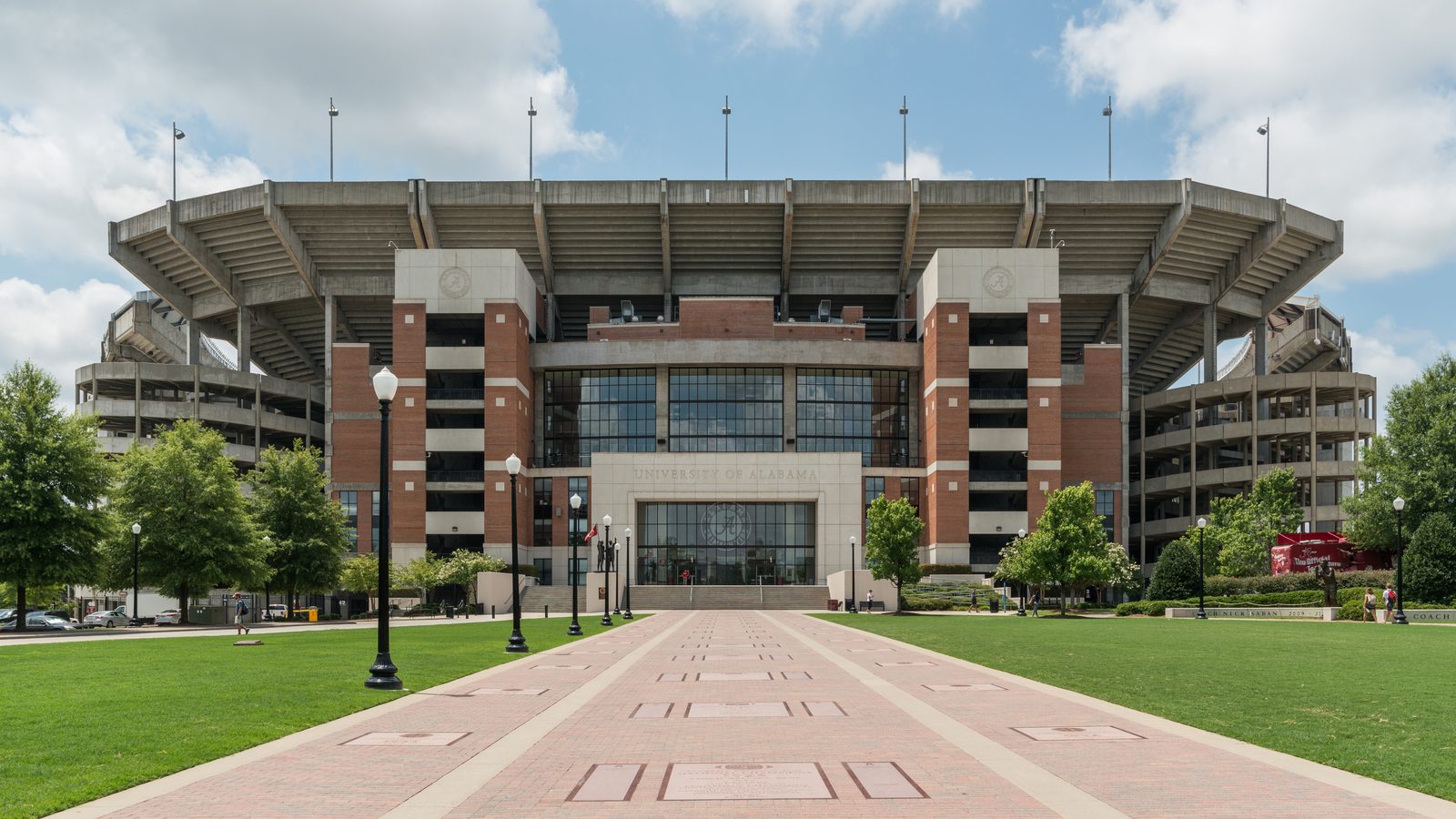
1. DeVonta Smith
WR · Alabama · 2017–2020
DeVonta Smith’s Alabama career included a championship-defining moment before its greatest statistical season. As a freshman, he caught the winning touchdown in overtime of the national title game. In 2020, he caught 117 passes for 1,856 yards and 23 touchdowns, winning the Heisman Trophy. That campaign brought reception volume, yardage and scoring together in a remarkably complete receiving season.
Smith’s claim to the top spot rests chiefly on that peak, with his earlier championship catch adding a separate career highlight. The receiving categories reinforce one another: frequent involvement was matched by substantial yardage and touchdown production. Heisman recognition adds national significance to the statistical case. Within a receiver ranking, that combination offers a stronger argument than either a signature play or an isolated category alone.
2. Larry Fitzgerald
WR · Pittsburgh · 2002–2003
Larry Fitzgerald packed substantial achievement into two seasons at Pittsburgh. He caught 34 touchdown passes and put together a streak of 18 consecutive games with a touchdown reception. His 2003 season brought the Biletnikoff and Walter Camp awards, along with a runner-up finish in Heisman voting as a sophomore. Those honors gave national recognition to a brief but highly productive college career.
Fitzgerald’s ranking depends on concentrated excellence rather than a long accumulation period. The scoring streak is especially valuable evidence because it establishes repeated contribution across games, not simply a large final total. His awards reinforce the strength of his peak from multiple perspectives. Against receivers with longer college résumés, he remains compelling because of how much sustained scoring and recognition he compressed into his stay at Pitt.
3. Randy Moss
WR · Marshall · 1996–1997
Randy Moss caught 54 touchdown passes across two seasons at Marshall, giving his college career an extraordinary scoring focus. In 1997, he caught 25 touchdowns, matching an NCAA record, and finished as a Heisman finalist. That season supplied a nationally recognized peak within a short college résumé already distinguished by the number of times his receptions ended in the end zone.
Moss’s position in this receiver ranking is grounded most clearly in scoring production. The career total demonstrates that his argument extends beyond the highlighted season, while the record-tying campaign provides a specific measure of peak achievement. Heisman consideration adds recognition without replacing the statistical evidence. His case favors the concentration of accomplishment over longevity, making touchdown production the central basis for comparison.
4. Michael Crabtree
WR · Texas Tech · 2007–2008
Michael Crabtree’s two seasons at Texas Tech produced 41 touchdown catches and two Biletnikoff Awards. As a freshman, he caught 134 passes and scored 22 receiving touchdowns, establishing a substantial peak immediately. His career also included the touchdown that beat top-ranked Texas in 2008 with one second remaining, adding a decisive game moment to an already decorated receiving résumé.
Crabtree’s ranking combines concentrated statistical production with repeat recognition at his position. His freshman reception total demonstrates involvement, while the scoring figures establish the payoff from that volume. Winning the Biletnikoff twice strengthens the case beyond a single breakout season. The Texas touchdown supplies a memorable illustration of his contribution, but the broader argument rests on sustained achievement throughout his brief college career.
5. Desmond Howard
WR · Michigan · 1989–1991
Desmond Howard’s 1991 Michigan season included 19 receiving touchdowns and a Heisman Trophy, along with the Maxwell and Walter Camp awards. His college highlights also included a diving touchdown catch against Notre Dame and the punt return against Ohio State capped by his famous Heisman pose. Howard’s résumé therefore encompasses receiving achievement and a notable return contribution without blurring his primary position as a wide receiver.
His place in this ranking starts with touchdown production as a pass catcher. The return highlight adds another dimension, but it should complement rather than substitute for his receiving case. The collection of national honors reinforces the significance of his peak season. Howard’s argument is strongest as a celebrated high point with multiple forms of contribution, not simply an iconic celebration.
6. Ja'Marr Chase
WR · LSU · 2018–2019
Ja’Marr Chase’s 2019 season at LSU featured 84 receptions for 1,780 yards and 20 touchdowns. He led the country in receiving yards and touchdown catches, won the Biletnikoff Award and contributed to the Tigers’ 15–0 season. Those accomplishments place his receiving production alongside team success, giving the campaign both a strong statistical identity and a clear place in LSU’s unbeaten run.
Chase’s all-time ranking is built chiefly around that exceptional peak rather than an extended career total. Leading nationally in both yardage and scoring supplies two distinct measures of receiving achievement, while the reception count shows the volume supporting them. The Biletnikoff reinforces his standing within the position. His case is persuasive because individual output and an unbeaten team season coincide without needing either to stand alone.
7. Justin Blackmon
WR · Oklahoma State · 2009–2011
Justin Blackmon’s Oklahoma State résumé is anchored by consecutive Biletnikoff Awards and more than 1,500 receiving yards in both 2010 and 2011. He caught more than 120 passes in each of his final two seasons, pairing substantial reception volume with substantial yardage. In 2011, he also helped lead the Cowboys to a Big 12 championship and a Fiesta Bowl victory.
Blackmon’s strongest ranking argument is repeat excellence. Rather than relying on one standout campaign, he sustained a high level of production across consecutive seasons and received the same major positional recognition in each. The catch totals and yardage reinforce one another, while the championship season adds team context. That repeated peak distinguishes his case from receivers whose placement rests mainly on a single spectacular year.
8. Calvin Johnson
WR · Georgia Tech · 2004–2006
Calvin Johnson, known as Megatron, finished his Georgia Tech career with 28 receiving touchdowns and won the 2006 Biletnikoff Award. His production came in a run-first offense, an important piece of context for evaluating a wide receiver’s college résumé. The touchdown total supplies the career measure, while the award identifies the celebrated peak within his time at Georgia Tech.
Johnson’s ranking calls for considering offensive setting alongside the numbers, without turning that context into hypothetical statistics. His scoring contribution matters within an attack oriented toward the ground game, and his positional award strengthens the argument that his peak deserves national comparison. The résumé pairs career achievement with a specific season of recognition. That is a firmer foundation than projecting what he might have produced in a different offense.
9. Amari Cooper
WR · Alabama · 2012–2014
Amari Cooper’s defining Alabama season came in 2014, when he caught 124 passes for 1,727 yards. Both totals set school records, giving the campaign a clear place in Alabama’s receiving history. He also finished as a Heisman finalist, extending the recognition beyond the program. His highlighted season thus combines record-setting reception volume, substantial yardage and national award consideration.
Cooper’s placement among college receivers rests primarily on the strength of that peak. The catch total measures how frequently he contributed, while the yardage demonstrates the output accompanying that involvement. School records establish local significance; Heisman contention adds a broader frame for comparison. His case does not require a longevity claim to be persuasive, because the combination of volume and yardage already supplies a substantial single-season argument.
10. Jerry Rice
WR · Mississippi Valley State · 1981–1984
Jerry Rice’s senior season at Mississippi Valley State produced 112 receptions for 1,845 yards and 27 touchdowns. At the FCS level, that record-setting production gave his college résumé a clear statistical centerpiece. The season stands out across three separate receiving categories, combining frequent catches with substantial yardage and an especially prominent scoring contribution rather than depending on one headline total.
Rice’s place in this ranking should be argued from that college achievement, with the level of competition kept in view. His senior numbers support a peak-season case, not an assumption about career totals. The balance of receptions, yards and touchdowns makes the performance relevant to an all-time receiver comparison. It also provides a college-specific basis for inclusion without borrowing significance from what followed professionally.
How We Ranked the Best College Wide Receivers
Ranked by receptions, receiving yards, receiving touchdowns, and awards like the Biletnikoff and Heisman. We gave extra credit to receivers who dominated even when defenses keyed on them.
Which of These Wide Receivers Became NFL Stars?
College production doesn't always translate to Sundays. Some of the players on this list became Hall of Famers, others never stuck in the NFL. That gap is exactly what CollegeGuessr tests: every day you see five NFL players and have to name the college football program they came from. Knowing the all-time great college wide receivers is a head start.
Test Yourself on the Best College Wide Receivers
Reading about them is one thing. Naming them on sight is another. CollegeGuessr shows five NFL players a day and asks which college each came from. Answer fast for up to 200 points per player, then see how you stack up on the daily NFL trivia leaderboard.