The 10 Best College Football Punters of All Time
Field position wins championships. Here are the 10 best college football punters of all time, ranked by average, hang time and Ray Guy Awards.
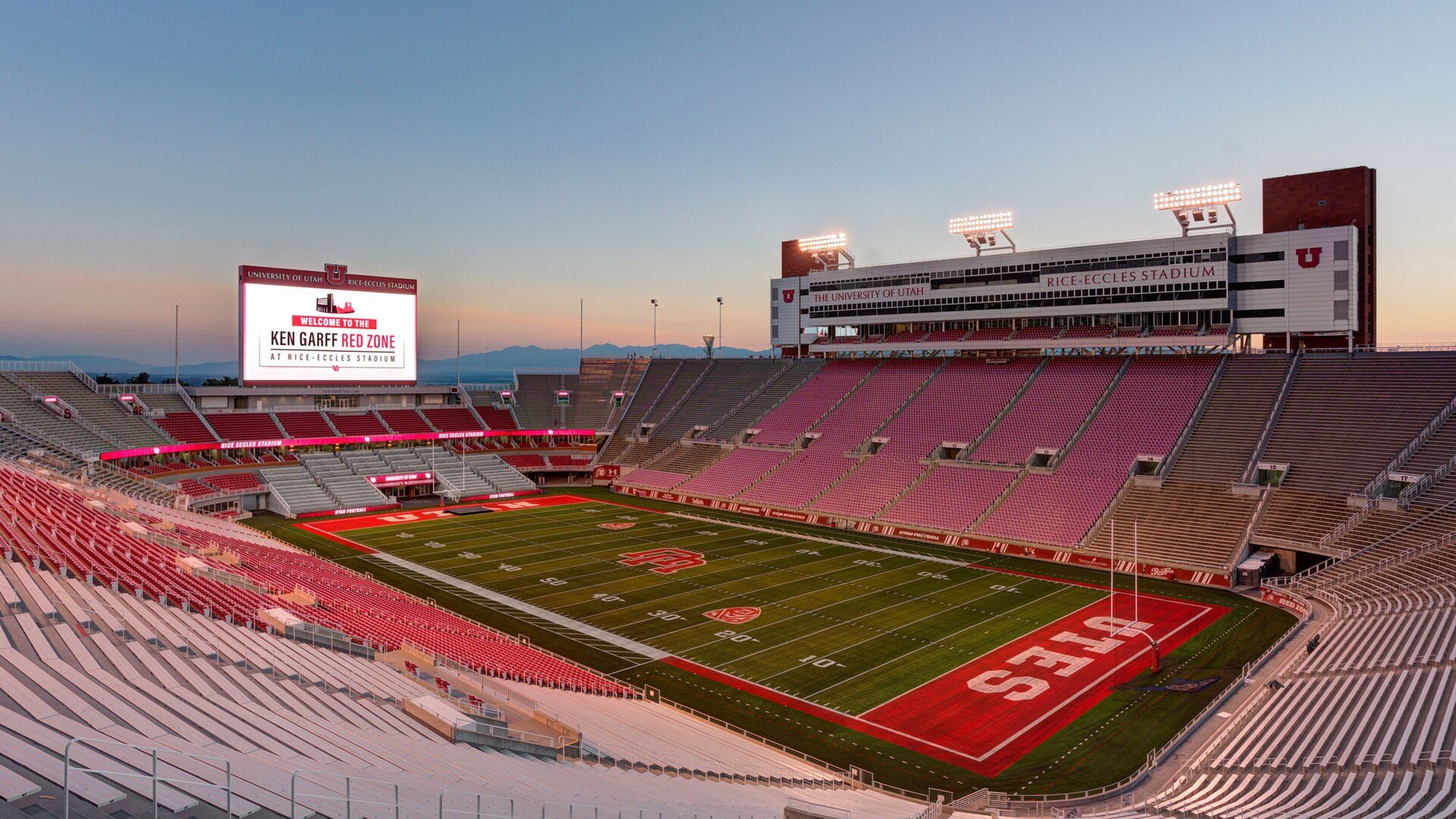
1. Ray Guy
P · Southern Miss · 1970–1972
Ray Guy averaged 46.2 yards per punt as a Southern Miss senior and also played safety. That crossover role adds context to his college career without changing the basis of his place here: his work as a punter. The award bearing his name supplies another dimension to his standing, linking a specific senior-season performance with enduring recognition of his identity at the position.
Guy’s ranking argument combines measurable production with positional legacy. The senior average is a season-level benchmark, not a career average, and should be weighed accordingly. His safety duties broaden the picture but do not replace the punting evidence. What makes his profile distinctive is the connection between an accomplished college season and a name that remains attached to recognition for punters.
2. Tom Hackett
P · Utah · 2012–2015
Tom Hackett won the Ray Guy Award twice during his Utah career. That repeated recognition is the central feature of his college résumé, giving him more than a single celebrated season to bring into a comparison of punters. His achievement is best described through those two honors, which establish recurring distinction at the position without needing an unsupported claim of exclusivity.
For ranking purposes, Hackett’s strength is the durability of his award-level achievement. A single honor can anchor a player’s peak; repeating it provides evidence that the recognition was not confined to one year. This is a different argument from leading a career-average table, but a substantial one. His Utah career merits a high place because its defining distinction was earned more than once.
3. Michael Dickson
P · Texas · 2015–2017
Michael Dickson’s Texas career featured the 2017 Ray Guy Award and Texas Bowl MVP recognition for his punting. Those honors capture two different scales of accomplishment: distinction at his position over a season and recognition within a particular game. The bowl award is especially relevant to his college profile because it places punting itself at the center of the individual achievement.
Dickson’s ranking case is built around an honored peak with a concrete game-level counterpart. The positional award establishes the broader accomplishment, while the bowl recognition illustrates how prominently his specialty could figure in a game’s evaluation. Neither requires invented details about placement or hang time. Together, they support a strong place among college punters through recognition of both seasonal work and a standout performance.
4. Shane Lechler
P · Texas A&M · 1996–1999
Shane Lechler averaged 44.7 yards per punt during his Texas A&M career. That career figure provides a broader view than a single-season average or an individual long punt, making sustained distance the central feature of his college profile. It also gives this ranking a straightforward statistical basis for considering him alongside punters whose strongest credentials are awards or exceptional peak seasons.
Lechler’s argument is strongest when the career scope of that average stays in view. Maintaining an average across a college résumé is a different achievement from reaching a higher mark for one season. Distance alone does not establish every aspect of punting effectiveness, but it remains a useful comparison. His place rests on that sustained statistical contribution rather than an overstated historical record claim.
5. Todd Sauerbrun
P · West Virginia · 1991–1994
Todd Sauerbrun averaged 48.4 yards per punt for West Virginia in 1994. That season supplies the clearest foundation for his place in this group, offering a specific measure of distance across a season rather than a single memorable punt. His college profile is therefore anchored by a defined statistical peak, with the average doing more editorial work than a general claim about power.
Among punters, Sauerbrun’s case emphasizes how high a player’s seasonal production could rise. The distinction between a season average and a career average matters: this mark supports an exceptional peak, not an assumption that every year matched it. Evaluated on that basis, his achievement gives him a credible place in the ranking and a concrete point of comparison with other distance-driven résumés.
6. Mitch Wishnowsky
P · Utah · 2016–2018
Mitch Wishnowsky won the 2016 Ray Guy Award at Utah, adding a major individual distinction to the program’s reputation for punting. That award is the defining supplied highlight of his college career and provides a specific season for evaluating his peak. Utah’s association with the position offers context, but Wishnowsky’s own honor gives his profile an individual foundation.
His ranking argument should begin with that personal achievement rather than the program’s nickname or reputation. Recognition devoted to punters is directly relevant to a comparison within the position, even when it takes a different form from career-volume statistics. Wishnowsky belongs in the discussion because of his award-winning season; the broader Utah tradition enriches the setting without serving as a substitute for what he accomplished himself.
7. Bryan Anger
P · California · 2008–2011
Bryan Anger’s California résumé includes three Ray Guy Award finalist selections, giving his college career a recurring point of positional recognition. That pattern is more useful to this ranking than treating his reputation as the product of one standout year. He later became a third-round draft selection, but that transition remains secondary to the recognition attached to his work in college.
Anger’s case rests on repeated consideration among accomplished punters rather than an award victory. Finalist recognition should not be presented as winning, yet its recurrence gives his résumé meaningful breadth. In a group that includes striking single-season statistics, he offers an argument based on sustained prominence in positional evaluation. His subsequent draft status adds a brief endpoint, not the reason for his college placement.
8. Reggie Roby
P · Iowa · 1979–1982
Reggie Roby averaged 49.8 yards per punt at Iowa in 1981, establishing an NCAA record at the time. That season gives his college résumé both a concrete distance measure and historical significance. The achievement is stronger when stated precisely: it was a seasonal benchmark that stood against the college standard of its own period, rather than an unqualified claim about every era.
Roby’s ranking argument centers on the height of that peak. A record-setting season shows more than the ability to produce one long punt, because an average reflects a body of attempts. It should still remain distinct from a career-long measure. His place is justified by an exceptional seasonal result that provides a clear statistical comparison with other leading college punters.
9. JK Scott
P · Alabama · 2014–2017
JK Scott averaged 48 yards per punt as an Alabama freshman and finished his college career with two national titles. The freshman average supplies the individual performance measure, while the championships describe the team setting in which his career unfolded. Keeping those accomplishments separate helps identify what belongs specifically to his punting résumé and what reflects Alabama’s collective success.
Scott’s strongest positional argument begins with the level of production he reached early in college. That freshman benchmark is a meaningful peak, though it should not be recast as his career average. The national titles add context without proving individual superiority over other punters. His ranking is most defensible when the statistical achievement leads and the championship experience remains a supporting part of the profile.
10. Bryce Baringer
P · Michigan State · 2019–2022
Bryce Baringer led the nation in yards per punt for Michigan State in 2022. That national lead provides a direct comparison with his contemporaries, giving his college résumé a clear seasonal accomplishment. Rather than relying on a general description of his leg strength, his profile can be grounded in where his production stood relative to other punters that year.
Baringer’s place in this ranking is a peak-season argument. Leading the country in an average is distinct from compiling the largest career workload, and it does not by itself describe placement or return prevention. It does, however, establish a meaningful distance benchmark within a season. That measurable advantage supports his inclusion while keeping the claim appropriately focused on his demonstrated achievement rather than assumed all-around superiority.
How We Ranked the Best College Punters
Ranked by career and single-season punting average, Ray Guy Awards, and impact on opponents' field position.
Which of These Punters Became NFL Stars?
College production doesn't always translate to Sundays. Some of the players on this list became Hall of Famers, others never stuck in the NFL. That gap is exactly what CollegeGuessr tests: every day you see five NFL players and have to name the college football program they came from. Knowing the all-time great college punters is a head start.
Test Yourself on the Best College Punters
Reading about them is one thing. Naming them on sight is another. CollegeGuessr shows five NFL players a day and asks which college each came from. Answer fast for up to 200 points per player, then see how you stack up on the daily NFL trivia leaderboard.