The 10 Best College Football Offensive Linemen of All Time
Linemen don't get stats, so we ranked the 10 best college football offensive linemen of all time by Outland and Lombardi trophies, All-America selections and sacks allowed.
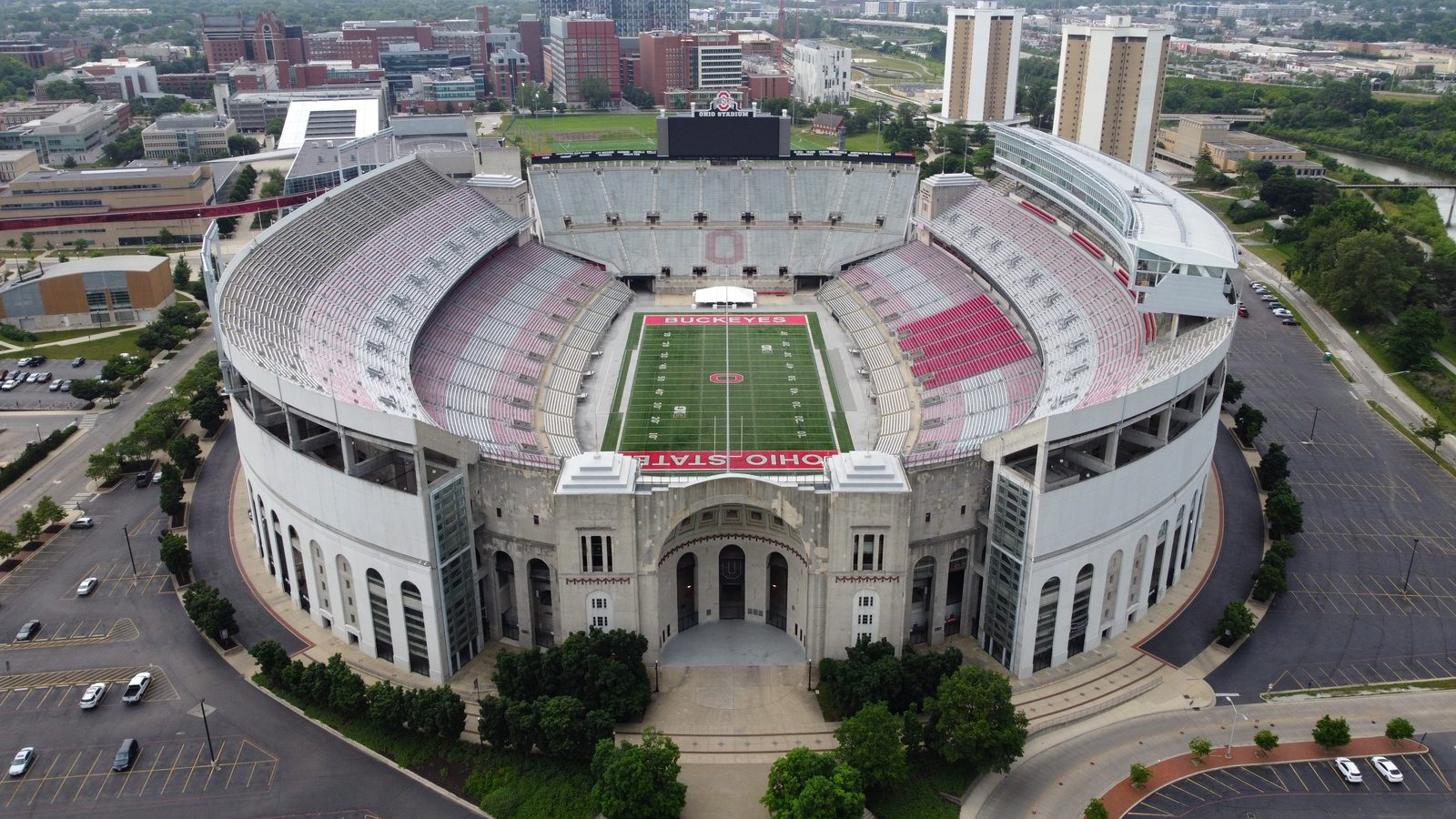
1. Orlando Pace
OL · Ohio State · 1994–1996
Orlando Pace's Ohio State career combined two Lombardi Awards, Outland Trophy recognition and a fourth-place finish in Heisman voting. As an offensive tackle, he assembled a résumé that reached beyond positional honors into the broader national conversation. The repeated Lombardi recognition is especially useful in evaluating his college career because it establishes distinction beyond a single award-winning season.
Pace's claim to the top spot rests on the breadth and repetition of that recognition. For offensive linemen, awards offer a meaningful comparison point where conventional scoring statistics do not describe the job. His Heisman finish adds another dimension without replacing the line-specific honors. Together, those achievements support a ranking based on sustained college standing, not merely a famous name or later professional success.
2. Bill Fralic
OL · Pittsburgh · 1981–1984
Bill Fralic earned All-American honors three times at Pittsburgh and twice finished in the top 10 of Heisman voting as an offensive tackle. His résumé therefore combines repeated recognition within the sport with recurring attention in its broader individual award discussion. The central feature is not one isolated season, but the number of occasions on which his college work received national acknowledgment.
That sustained recognition gives Fralic a strong case near the top of an offensive line ranking. All-American honors establish positional standing, while the Heisman finishes add evidence that his reputation extended beyond line play's usual award categories. Neither requires an invented blocking statistic to carry weight. His distinction in this comparison is the depth of his acclaim across multiple seasons.
3. Jonathan Ogden
OL · UCLA · 1992–1995
Jonathan Ogden won the 1995 Outland Trophy at UCLA and earned unanimous All-American recognition as an offensive tackle. At 6-foot-9, he also competed successfully beyond football, becoming a conference champion in the shot put. His college résumé thus includes a clearly recognized football peak and a separate athletic achievement, with the Outland season remaining the centerpiece of his offensive line case.
Ogden's ranking rests primarily on the agreement between a major line award and unanimous national honors. The shot put title broadens the picture of his college athletic career without proving any specific blocking technique. For a comparison among offensive linemen, the football recognition does the essential work: it identifies a peak strong enough to support his place without leaning on later professional accomplishments.
4. John Hannah
OL · Alabama · 1970–1972
John Hannah earned All-American recognition twice as an Alabama guard and also lettered in track and wrestling. His college résumé combines repeated football distinction with participation in other demanding sports. The guard position is important to the comparison: his achievements belong to interior offensive line play, rather than being folded into a ranking that treats every lineman as a tackle.
Hannah's strongest argument is sustained recognition at his actual position. His other sports add breadth to the college portrait, but they should not be used to invent explanations for his blocking ability. The repeated All-American honors supply the firmer evidence. They give his case depth beyond a single peak and make his Alabama career relevant alongside linemen whose résumés feature major individual trophies.
5. Jim Parker
OL · Ohio State · 1954–1956
Jim Parker won the 1956 Outland Trophy at Ohio State and anchored the line for two Big Ten championship teams. Those accomplishments connect individual recognition with a meaningful team role. The trophy supplies a defined high point in his college career, while the conference titles place his line work within more than one successful championship campaign.
Parker's ranking case benefits from that balance. Team championships cannot be credited to one offensive lineman, but his anchoring role gives them relevance alongside his individual honor. The Outland establishes his personal distinction; the championship context broadens the picture beyond an award-winning season. His place among the great college linemen rests on both elements, without requiring unsupported blocking totals or claims about specific techniques.
6. Barrett Jones
OL · Alabama · 2009–2012
Barrett Jones earned major recognition at different spots on Alabama's offensive line, winning the Outland Trophy at tackle and the Rimington Trophy at center. He also collected three national championships. His college résumé therefore offers more than a list of team successes: it includes individual distinction tied to separate line positions, making versatility a concrete part of his record.
That positional breadth is the strongest feature of Jones's ranking argument. Playing multiple roles is notable, but earning major honors in those roles gives the achievement greater weight. The championships add context without standing in for an individual evaluation. Compared with linemen whose cases center on one position or one peak, Jones brings recognized excellence across assignments and a college career connected to repeated team success.
7. Dave Rimington
OL · Nebraska · 1979–1982
Dave Rimington won the Outland Trophy twice during his Nebraska career, establishing repeated national distinction as a center. His name now appears on the award honoring the nation's best player at that position. The college accomplishments and the later naming honor are related parts of his legacy, but the repeat Outland recognition remains the direct evidence of his playing résumé.
Rimington's place in this ranking is especially strong when sustained excellence receives weight alongside a single outstanding season. Winning a major line award more than once gives his case a clear longevity dimension. The center trophy bearing his name underscores his lasting association with the position, while his own college honors provide the foundation for comparing him with tackles, guards and other centers.
8. Joe Thomas
OL · Wisconsin · 2003–2006
Joe Thomas won the 2006 Outland Trophy at Wisconsin and earned unanimous All-American honors as an offensive tackle. His college experience also included early work on the defensive line and shot put participation with the track team. Those crossover roles add context, but his strongest football distinction came through the offensive line achievements that define his place in this comparison.
Thomas's ranking argument centers on a peak supported by both a major trophy and unanimous recognition. That combination gives a clear basis for inclusion without relying on draft expectations or professional reputation. His defensive experience should be acknowledged without relabeling him, and track participation should remain an additional college detail. The decisive evidence is the national standing he earned for his offensive tackle play.
9. Quenton Nelson
OL · Notre Dame · 2014–2017
Quenton Nelson earned unanimous All-American recognition at guard for Notre Dame in 2017, playing on a highly regarded rushing line. That season supplies the central point of his college résumé here: individual acclaim within a unit whose reputation was built around the ground game. His achievement should be understood specifically as guard play, not recast as a tackle's résumé.
Nelson's case is primarily about the strength of that recognized peak. The line's rushing reputation supplies useful team context, while unanimous All-American honors distinguish his individual standing within it. Neither establishes a complete statistical account of his blocking, nor is one necessary to explain his inclusion. His ranking rests on clear national recognition and a meaningful role in an accomplished offensive line.
10. Penei Sewell
OL · Oregon · 2018–2019
Penei Sewell won the 2019 Outland Trophy at Oregon as a sophomore and posted PFF's top grade in the country. Those two markers give his college peak both award recognition and a grading-based measure of performance. His class standing adds another important detail: the achievement arrived early in his college career rather than at the end of a lengthy résumé.
Sewell's place in this comparison is consequently built around peak quality more than longevity. The trophy and the PFF evaluation offer different forms of support for the same standout season, although a grading system should not be treated as a career counting statistic. Together, they make a focused argument for inclusion among decorated college linemen without projecting additional seasons or accomplishments onto his record.
How We Ranked the Best College Offensive Linemen
With no box-score stats, we leaned on Outland, Lombardi and Rimington awards, consensus All-America selections, and how dominant each lineman's offense was running behind him.
Which of These Offensive Linemen Became NFL Stars?
College production doesn't always translate to Sundays. Some of the players on this list became Hall of Famers, others never stuck in the NFL. That gap is exactly what CollegeGuessr tests: every day you see five NFL players and have to name the college football program they came from. Knowing the all-time great college offensive linemen is a head start.
Test Yourself on the Best College Offensive Linemen
Reading about them is one thing. Naming them on sight is another. CollegeGuessr shows five NFL players a day and asks which college each came from. Answer fast for up to 200 points per player, then see how you stack up on the daily NFL trivia leaderboard.