The 5 Best Montana NFL Players of All Time
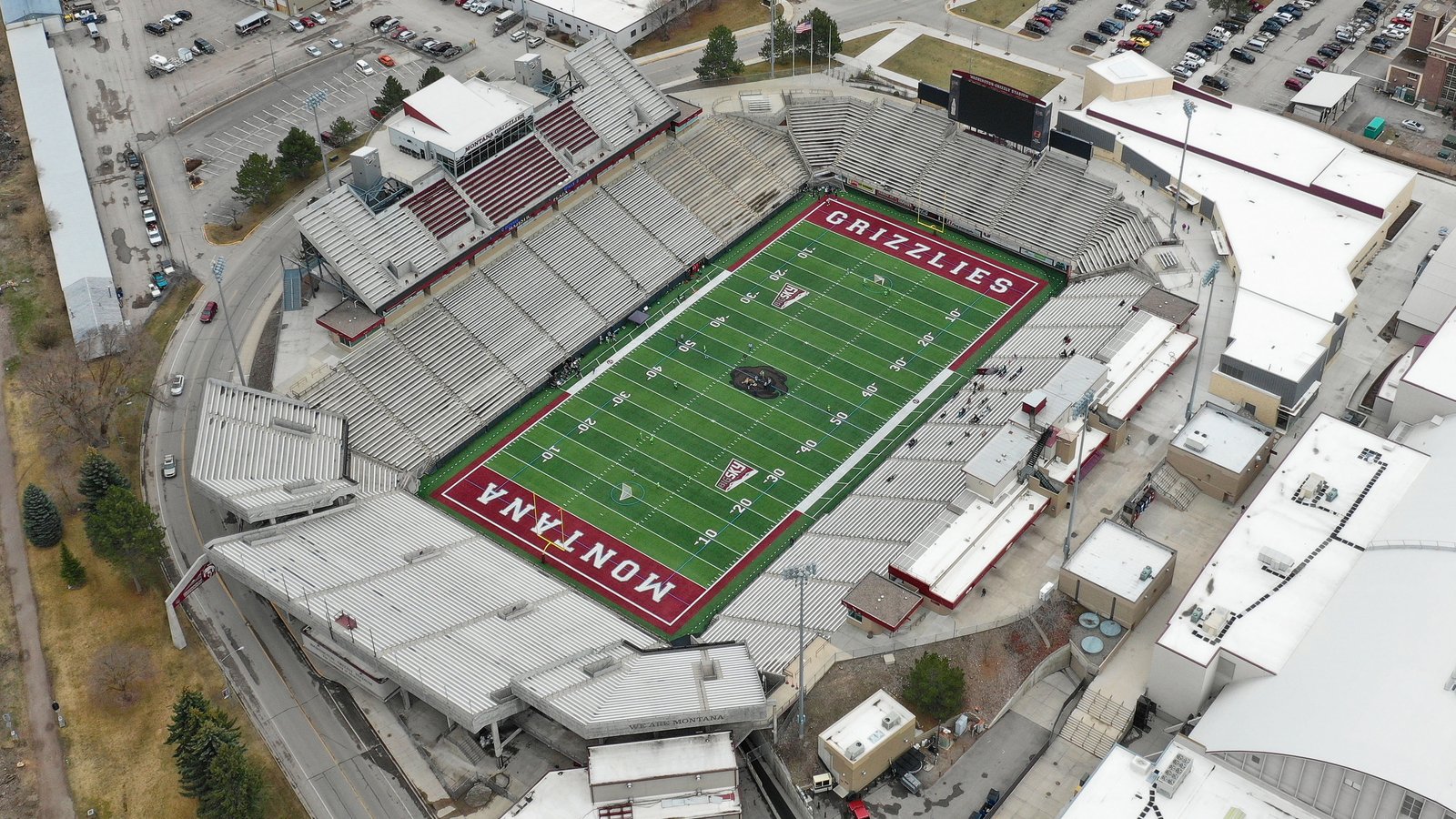
Washington-Grizzly Stadium is one of the loudest buildings in FCS, and Montana has used that home field to build a genuine national program. These five Grizzlies are ranked on what they did in Missoula, from record shattering quarterback play to lockdown corner work.
1. Dave Dickenson
Quarterback · 1992 to 1995
Dave Dickenson gave Montana both sustained quarterback production and a championship peak. He threw for 11,080 career yards, then capped his college career by winning the 1995 Walter Payton Award and leading the Grizzlies to a national championship. His accuracy and quick reads were central to that passing success. He later became a Grey Cup MVP and spent time with the Chargers.
His place in Montana’s ranking rests on the combination of career volume and a defining final season. The passing total establishes a broader foundation than one outstanding year, while the national award and championship connect individual achievement with team success. That balance makes his Montana career the strongest part of his case, rather than simply a prelude to professional football.
2. Trumaine Johnson
Cornerback · 2008 to 2011
Trumaine Johnson built his Montana career around the impact of a long, physical cornerback who could turn coverage opportunities into possessions. He intercepted 17 passes as a Grizzly, a concrete measure of his contribution to the secondary. His college play preceded a move to the NFL, where the Rams selected him in the third round of the 2012 draft.
For a Montana ranking, the interception total carries more weight than sweeping claims about opponents avoiding him. It documents repeated production across his college career rather than depending on a single signature season. His physical style supplies context for that record, while his draft selection provides a secondary professional connection. The central argument remains what he delivered for the Grizzlies: substantial turnover production from a demanding defensive position.
3. Kroy Biermann
Defensive End · 2004 to 2007
Kroy Biermann’s Montana career reached its clearest peak in 2007, when the defensive end recorded 14.5 sacks and won the Buck Buchanan Award as the top defensive player in FCS. His pass rushing relied more on quickness than size, giving his production a recognizable identity. Atlanta later selected him in the fifth round, and he played nine NFL seasons.
The college case is anchored in that nationally recognized final season. His sack production gives substance to the award, showing why his work deserved attention beyond the Big Sky. Rather than requiring a career-total argument, his ranking rests on the height of his peak and the value of disruptive defensive-end play. His professional longevity adds context without overshadowing what he accomplished at Montana.
4. Marc Mariani
Wide Receiver · 2006 to 2009
Marc Mariani contributed to Montana as both a wide receiver and a returner, finishing his college career with more than 2,000 receiving yards. His precise routes and ability to find openings in zone coverage supported his offensive production, while his return work added another dimension. That second role remained important professionally: he made the Pro Bowl as a Tennessee rookie return man.
Mariani’s ranking should account for the breadth of his Montana contribution rather than viewing him solely through his later specialty. His receiving production establishes meaningful offensive value across his college career, and the return role broadens that case. The appeal is cumulative and multidimensional, not dependent on one supplied award-winning season. His professional recognition reinforces the crossover without changing his college identity as a receiver.
5. Colt Anderson
Safety · 2005 to 2008
Colt Anderson went from walk-on to an important contributor in Montana’s secondary, recording 105 tackles in 2008. The safety’s college profile combined physical tackling with the ability to cover ground across the field. He later went undrafted before building an eight-year NFL career centered largely on special teams, where he also served as a captain.
His Montana case is best grounded in the defensive responsibility reflected by that tackling production. The final-season total offers a clear measure of involvement, while his progression from walk-on supplies the larger career arc. Those are distinct strengths: one describes his peak contribution, the other his path into a significant role. His professional staying power is a useful epilogue, but his work at safety gives this ranking its college foundation.
Tough Calls
Jordan Tripp, Tuff Harris, Tyrone Holmes, Brock Coyle, and Levi Horn all belong in a wider list. Tripp in particular was a tackling machine in Missoula. This ranking favored national awards and sustained dominance in the Big Sky.
Why Montana Travels Well to the NFL
The Grizzlies play in front of full houses every week and take on FBS opponents most seasons, so the pressure is not new to them. Montana's defensive backs and edge rushers in particular show up on scouting reports because the Big Sky throws the ball a lot. That volume creates real tape.
Test Yourself on Montana Players
Reading about them is one thing. Naming them on sight is another. CollegeGuessr shows five NFL players a day and asks which college each came from. Answer fast for up to 200 points per player, then see how you stack up on the daily NFL trivia leaderboard.